Top 20 Interview Questions and How to Answer Them in 2025
'/%3e%3cpath%20d='M72.272%2053.346C76.23%2045.931%2093.481%208.92899%2096.977%205.97699C98.053%205.94899%20102.458%206.48198%20101.452%208.51098C93.584%2024.371%2085.375%2040.252%2077.212%2056.024C83.302%2054.573%20111.157%2046.449%20114.7%2047.443C115.703%2048.532%20115.583%2048.956%20115.788%2050.449C114.901%2052.321%20112.086%2052.907%20110.088%2053.387C98.256%2056.231%2086.277%2059.832%2074.425%2062.483C59.249%2090.035%2046.178%20121.861%2033.783%20150.846C30.575%20158.348%2030.118%20167.595%2027.181%20175.328L26.408%20177.378C24.136%20174.473%2023.967%20174.022%2023.596%20170.303C25.259%20155.895%2026.651%20154.177%2031.581%20140.84C24.84%20124.048%2012.884%20104.343%206.177%2087.654C6.982%2085.868%207.31801%2084.452%208.95801%2083.518C12.021%2084.558%2031.404%20127.881%2034.773%20133.945C39.204%20123.518%2044.998%20111.65%2049.046%20101.551C43.662%2088.506%2036.52%2075.786%2031.25%2062.636C29.513%2058.304%2024.108%2051.027%2025.925%2046.636C27.115%2045.603%2027.011%2045.649%2028.564%2045.391C29.457%2045.844%2029.772%2046.251%2030.206%2047.152C37.74%2062.803%2044.084%2079.566%2052.346%2094.825C57.786%2083.766%2063.087%2071.038%2069.062%2060.281C64.167%2047.096%2057.263%2034.343%2052.394%2021.693L57.416%2019.343C62.563%2030.597%2067.228%2042.06%2072.272%2053.346Z'%20fill='white'/%3e%3cdefs%3e%3clinearGradient%20id='paint0_linear_2001_131'%20x1='60.4212'%20y1='0'%20x2='60.4212'%20y2='188.575'%20gradientUnits='userSpaceOnUse'%3e%3cstop%20stop-color='%2340DF9C'/%3e%3cstop%20offset='1'%20stop-color='%23A78BFA'/%3e%3c/linearGradient%3e%3c/defs%3e%3c/svg%3e)
Top 20 Interview Questions and How to Answer Them in 2025
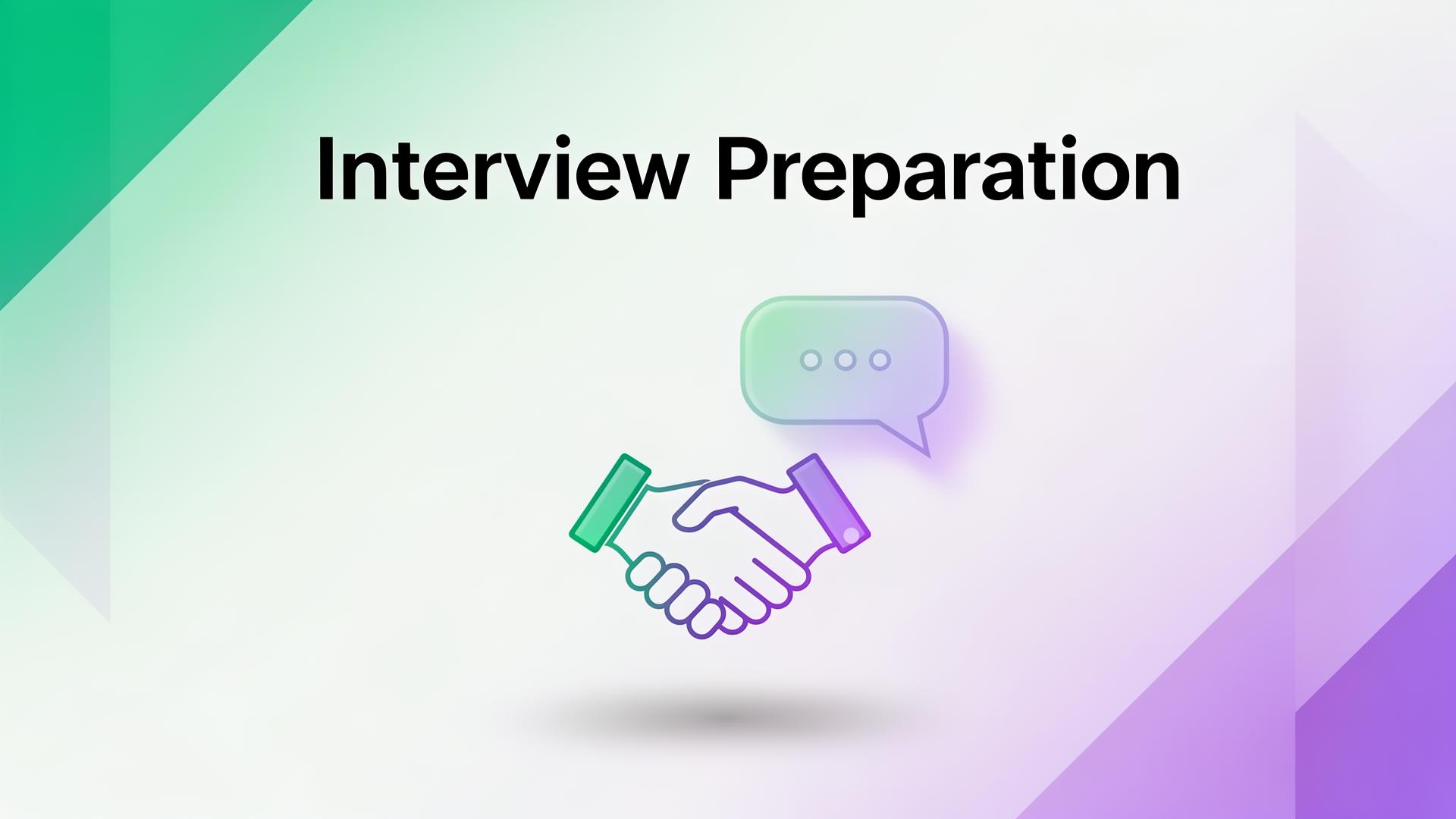
Job interviews can be nerve-wracking, but preparation is key to success. This guide covers the most frequently asked interview questions and provides proven strategies for crafting compelling responses.
The STAR Method for Behavioral Questions
Before diving into specific questions, understand the STAR method for structuring your answers:
- Situation: Set the context for your story
- Task: Describe the challenge or responsibility
- Action: Explain what you did
- Result: Share the outcomes and what you learned
The 20 Most Common Interview Questions
1. "Tell me about yourself"
This is often the opening question. Create a concise 2-minute pitch covering:
- Current role and responsibilities
- Relevant experience and achievements
- Why you're interested in this position
Example Answer: "I'm currently a sales manager at XYZ Corp, where I've led a team of 12 to exceed quarterly targets by an average of 25% over the past two years. Before this role, I spent three years developing my skills in client relationships and strategic account management. I'm particularly excited about this opportunity because it combines my passion for team leadership with my interest in the technology sector."
2. "Why do you want to work here?"
Research the company thoroughly and mention:
- Specific aspects of the company culture or mission
- Products or services that excite you
- How your values align with theirs
3. "What are your greatest strengths?"
Choose 2-3 strengths relevant to the role and provide examples:
- Pick skills mentioned in the job description
- Back up each strength with a concrete example
- Show how these strengths led to measurable results
4. "What is your greatest weakness?"
Be honest but strategic:
- Choose a real weakness that isn't critical to the role
- Explain what you're doing to improve
- Show self-awareness and commitment to growth
Example: "I sometimes struggle with delegating because I have high standards for work quality. I'm addressing this by implementing clear documentation processes and scheduling regular check-ins with team members to build trust while maintaining quality standards."
5. "Where do you see yourself in five years?"
Demonstrate ambition while showing commitment:
- Express interest in growing with the company
- Mention skills you want to develop
- Align your goals with potential career paths at the company
6. "Why are you leaving your current job?"
Stay positive and focus on what you're moving toward:
- Avoid criticizing your current employer
- Emphasize seeking new challenges or growth opportunities
- Frame it as a career progression decision
7. "Tell me about a time you faced a challenge at work"
Use the STAR method:
- Describe a specific challenge
- Explain your approach to solving it
- Highlight the positive outcome
- Share what you learned
8. "How do you handle stress and pressure?"
Provide concrete examples of your coping strategies:
- Time management techniques
- Prioritization methods
- Specific situations where you remained calm under pressure
9. "Describe a time you worked on a team"
Highlight collaboration skills:
- Your role in the team
- How you contributed to team success
- Challenges you overcame together
- Results achieved
10. "Tell me about a time you failed"
Show vulnerability and growth:
- Be honest about a real failure
- Take responsibility without blaming others
- Emphasize what you learned
- Explain how you've applied those lessons
11. "Why should we hire you?"
This is your elevator pitch:
- Summarize your most relevant qualifications
- Highlight unique skills or experiences
- Connect your value to company needs
- Show enthusiasm for the role
12. "What are your salary expectations?"
Do your research beforehand:
- Provide a salary range based on market research
- Consider your experience and location
- Ask about the full compensation package
- Be prepared to negotiate
13. "How do you prioritize your work?"
Demonstrate organizational skills:
- Explain your prioritization framework (urgent vs. important)
- Mention tools or systems you use
- Give a specific example of managing multiple priorities
14. "Tell me about a time you disagreed with a supervisor"
Show diplomacy and problem-solving:
- Describe the situation professionally
- Explain how you communicated your perspective
- Focus on finding a solution
- Emphasize respect for authority
15. "What motivates you?"
Be genuine and relevant:
- Connect your motivation to the role
- Mention both intrinsic and extrinsic motivators
- Provide examples from past experiences
16. "How do you handle criticism?"
Demonstrate maturity and growth mindset:
- Explain that you view feedback as an opportunity
- Describe your process for receiving and implementing feedback
- Share a specific example
17. "Tell me about a time you showed leadership"
Leadership isn't just for managers:
- Describe taking initiative
- Explain how you influenced others
- Share measurable results
- Highlight lessons learned
18. "What's your management style?"
If applicable, describe your approach:
- Balance between hands-on and delegating
- How you motivate team members
- Communication preferences
- Provide concrete examples
19. "How do you stay current in your field?"
Show commitment to professional development:
- Industry publications or blogs you follow
- Professional associations or networking groups
- Courses, certifications, or training
- Conferences or webinars attended
20. "Do you have any questions for me?"
Always have 3-5 thoughtful questions prepared:
- About the role and day-to-day responsibilities
- Team structure and dynamics
- Company growth and future direction
- Success metrics for the position
Interview Best Practices
Before the Interview
- Research the company thoroughly
- Prepare examples for behavioral questions
- Practice your answers out loud
- Prepare questions for the interviewer
- Plan your outfit and route
During the Interview
- Arrive 10-15 minutes early
- Bring multiple copies of your resume
- Make eye contact and smile
- Listen carefully to questions
- Ask for clarification if needed
- Be authentic and enthusiastic
After the Interview
- Send a thank-you email within 24 hours
- Reiterate your interest in the position
- Reference specific conversation points
- Address any questions you didn't answer well
Virtual Interview Tips
With remote work becoming more common, virtual interviews are here to stay:
- Test your technology beforehand
- Choose a quiet, well-lit location
- Position your camera at eye level
- Dress professionally from head to toe
- Minimize distractions in your background
- Look at the camera when speaking
Conclusion
Interview success comes from thorough preparation and authentic communication. Use these questions and strategies to build confidence and showcase your best professional self.
Ready to put these skills to practice? Browse our latest job opportunities and start scheduling interviews today.
Written by the Hyra Team
Your friendly career companion, helping you navigate the job market with the best advice and insights. Keep climbing that career ladder! 🚀✨